A Greener “I Do”
02 Feb 2026
Boulder County couples rethink weddings with sustainability in mind
story Lexi Marshall
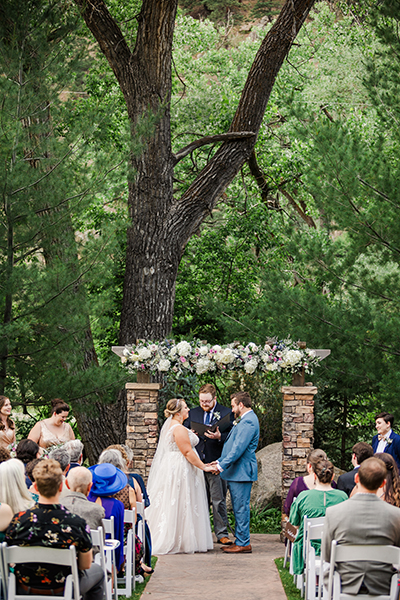
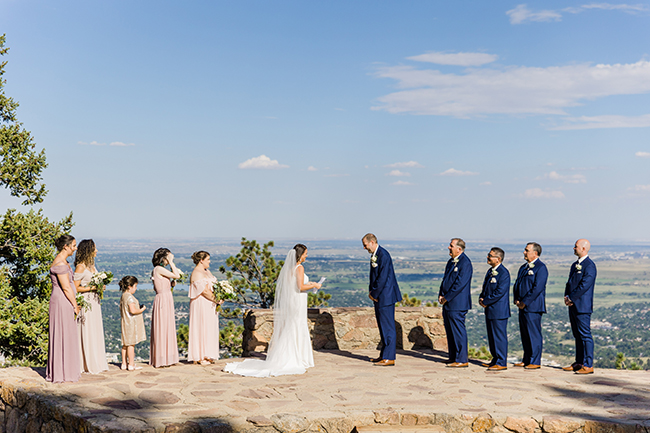
In Boulder County, sustainability has shifted from niche trend to wedding norm. From locally grown florals to waste-conscious venues, couples are proving that environmentally responsible celebrations can be just as beautiful and meaningful as traditional ones.
“I always tell my couples that sustainable does not have to mean cheap, or less than,” says Katie Fletcher, a Colorado-based wedding and elopement photographer who has been documenting weddings since 2018. “You can have a gorgeous wedding day that’s also sustainable—it isn’t one or the other.”
Katie, who is Leave No Trace Aware–certified, has noticed a clear shift in priorities, particularly around guest count. “Cutting back naturally reduces all the resources associated with weddings,” she explains. “Many couples want a more intimate feel, with the sustainability benefit as a bonus.”
Throughout the planning process, couples are making intentional swaps. Rental decor has largely replaced single-use items destined for landfills, while disposable favors like koozies and sunglasses are being traded for consumable treats or experience-driven moments.
Local venues are keeping pace. Many Boulder County locations now emphasize recycling and composting, encourage shuttle services to reduce emissions, and provide reusable items to minimize waste. Boulder County also reinforces these values by requiring commercial photographers to complete Leave No Trace education as part of the Boulder Open Space & Mountain Parks permitting process.
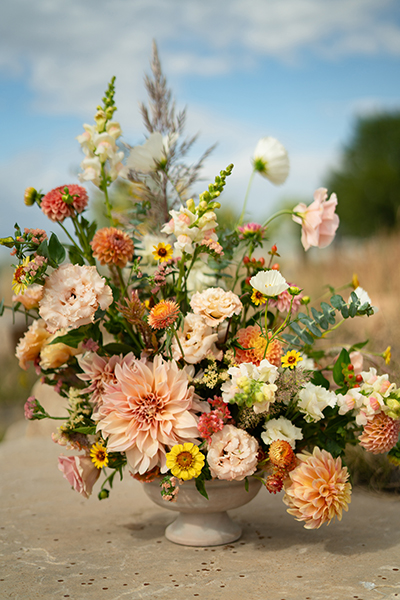
Florals—one of the most waste-heavy wedding elements—are also evolving. Helen Skiba of Artemis Flower Farm is reshaping expectations with a radically local approach.
“If a couple works with us, they’ll only receive seasonal blooms from our farm or nearby farms, designed in an ecologically conscious way,” Helen says.
The conventional floral industry carries a heavy environmental toll, with roughly 80 percent of flowers sold in the U.S. flown in from overseas. Traditional practices often rely on floral foam, unrecyclable plastics, chemical pesticides, and designs discarded after a single day.
Artemis Flower Farm takes a different path, using reusable vases and durable mechanics such as chicken wire for installations. Their farming practices include low tillage, drip irrigation, cover cropping, and organic-approved pest control. Sustainability, Helen adds, also applies to people—employees receive living wages, paid time off, and sick leave.
One common misconception is that sustainable florals lack visual impact. In reality, flowers harvested at peak bloom and grown in full sun are “more vibrant, alive, and varied” than imported varieties, Helen says. Delicate blooms like zinnias, dahlias, cosmos, and even field-grown snapdragons—which surprisingly smell like jelly beans—take center stage.
“Local, seasonal blooms pull you into the present time,” Helen says, “and what could be more special for your wedding day than knowing that the flowers in your bouquet will be blooming every year for your anniversary, reminding you of the day you said ‘I do?’”
Wedding planner Honey Ahijevych of Ivory Events approaches sustainability holistically, noting that waste reduction begins early. “Digital invitations and QR-based RSVPs dramatically cut paper waste,” she says. She also encourages couples to work with caterers on reasonable portions, plant-forward menus, and reusable or compostable serviceware.
On-site waste management matters, too. Honey recommends clearly labeled recycling and compost stations, along with caterers such as Greens Point Catering, Italic Catering, and Serendipity Catering, which compost food scraps or coordinate donations.
The momentum continues to build. Nearly 24 percent of couples now donate leftover decor or food, while many others resell or repurpose items. “We recently donated flowers from a Vail wedding to a children’s hospital,” she says, adding that potted plants or reusing arrangements between ceremony and reception are simple, impactful solutions.
Boulder County offers no shortage of eco-forward venues. Boulder Flower Farm’s gardens reduce decor needs, while The Old Elm and Ogallala Farm offer organic, farm-to-table settings. Venues like Chautauqua Community House, Boulder Creek by Wedgewood Weddings, and The Greenbriar Inn integrate local food and outdoor elements seamlessly.
“When touring venues, ask about recycling, composting, local sourcing, and waste plans,” Honey advises. “Even traditional venues can have strong sustainability practices when vendors collaborate.”
For Boulder County couples, the takeaway is simple: Green weddings aren’t about perfection—they’re about purpose. Even small decisions leave a lighter footprint and help tell a more meaningful story.
“Sustainability doesn’t require sacrificing beauty or experience,” Honey says. “It’s about intentional choices that reflect your values.”
Learn more at katiefletcherphoto.com, artemisflowerfarm.com, and ivoryeventscolorado.com.