Celebrate the Solstice
02 Dec 2025
Take a pause for the darkness that makes light possible
By Heather Shoning
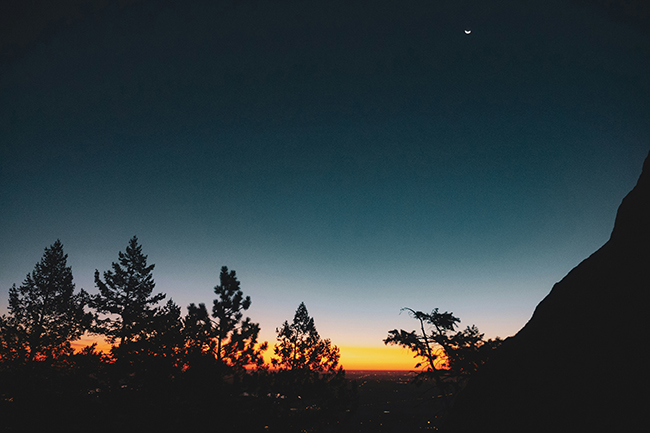
Imagine the sun slipping behind the Flatirons a little earlier each evening, the air crisp enough to feel electric. That moment when the dark feels real and endless—when you can sense the world holding its breath. On December 21, here in the Northern Hemisphere, the sun stops its southward crawl for just a beat before turning back toward the light. That pause is the winter solstice.
It’s not just an astronomical event. It’s an invitation. A cue to slow down, to notice the shadows, and to remember that stillness has its own kind of energy. Long before anyone strung up holiday lights, people gathered around fire and stone to mark the shortest day, honoring the delicate balance between darkness and dawn. Across cultures, the solstice has always symbolized the rebirth of the sun, the promise that even after the longest night, warmth and light will return.
Thousands of years ago, people built monuments like Stonehenge in England and Newgrange in Ireland precisely to capture this moment—architectural calendars marking the sun’s rise and set on solstice day and the days in between. In Rome, they celebrated Sol Invictus, the unconquered sun, around this same time of year. In China, the Dongzhi Festival still marks the turning point when light, life, and energy began to rise again. Wherever you go in human history, this pivot from dark to light has been a reason to stop, reflect, and hope.
Today, we’re not quite as dramatic about it—no huge stone circles or temple feasts—but the instinct is still there. You feel it when you crave quiet after the rush of the holidays, when you light candles on a dark December evening, or when you take that deep breath standing outside on a cold night. The solstice sneaks into our bones whether we name it or not.
Here in Boulder County, the connection feels especially alive. The mountains themselves seem to bow toward the sun’s low arc, the snow reflecting what little light we get like a mirror of intention. The air holds that high-altitude purity that makes everything sharper—sounds, colors, even emotions. It’s easy to imagine ancient people doing exactly what we do now: gathering close, telling stories, making food, lighting fires, and trusting that the light will return.
And honestly, the solstice couldn’t come at a better time. Late December can be rough. The holiday noise gets loud, the to-do lists long, the daylight feels impossibly short. The solstice is a counter-movement to all that bustle—it says, “Stop. The earth is pausing. You can, too.” It’s the universe’s way of giving you permission to slow down and remember that you’re part of something cyclical, not linear. You’re not falling behind. You’re just in winter.
For a lot of women, that message hits hard. We live in a culture that tells us to keep shining, keep producing, keep smiling—even when we’re tired. But nature doesn’t do that. The trees don’t panic when they lose their leaves. The bears don’t apologize for hibernating. The solstice reminds us that darkness isn’t failure; it’s renewal.
That’s the real mystery of this time of year—it’s not about celebrating the light’s return as much as it’s about honoring the dark that makes light meaningful. Without the shadow, sunrise would be ordinary. Without the long night, the first pink streak of dawn wouldn’t feel like grace.
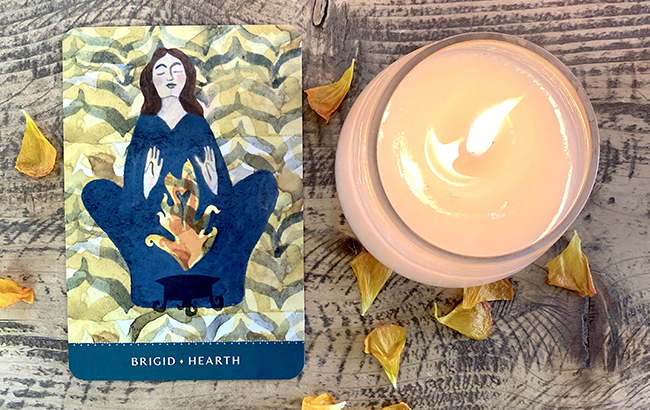
If you want to mark the solstice in your own way, it doesn’t have to look like a ritual. It might just be a quiet moment by a window, watching the sun sink over the Flatirons. It might be lighting a candle, brewing tea, or writing down what you’re ready to release before the new year begins. Or maybe it’s gathering with friends for a simple meal, laughing, toasting to the turning of the sun, and feeling—if only for a heartbeat—that we’re all connected in this ancient, celestial rhythm.
Because that’s what the solstice teaches, in the end: The dark isn’t here to defeat us. It’s here to remind us how resilient we are. How much light we can create ourselves, just by being alive, aware, and a little bit still. So this year, when the shortest day arrives, don’t rush past it. Let it unfold. Step outside. Breathe in the cold air. Watch the horizon. The sun will find its way back, just as it always does. And so will you.