Coming Back to Yourself
01 Jun 2026
A local therapist is helping people step out of their heads and back into their bodies
Written By: Emily O’Brien
For many people trying to feel better—less anxious, more grounded, more themselves—the options can feel endless. Monthly subscriptions. Five-step plans. Promises of transformation, packaged neatly and sold quickly. The underlying message is often the same: If you just try harder, think differently, or find the right system, you’ll finally feel okay.
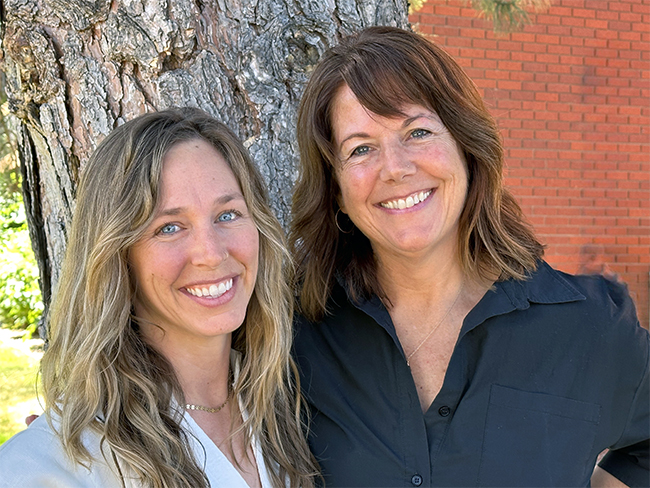
But after 30 years working as a therapist following traditional therapy models, Taylor White Moffitt, co-founder of Humanity Shared with fellow therapist Kim Locke, began to see a different pattern emerge. The people sitting across from her weren’t lacking effort—they were worn out from it. They had spent years analyzing, coping, and pushing through, yet still felt disconnected from themselves in ways they couldn’t quite explain.
“I kept seeing parents, children, and community members working so hard to function in a world that was so difficult,” she says. “And at the same time, they were being sold all kinds of ‘sexy’ quick fixes for healing.”
What she wanted to offer instead was something far less marketable—and far more honest: a way of healing that didn’t rely on more information or more effort, but on a different kind of awareness altogether.
“We weren’t actually seeing people,” she says. “We were talking at them—giving more information, more stimulation—but not really helping them experience change.”
That realization became the foundation for Humanity Shared, a practice built on the simple yet often overlooked idea that many people live almost entirely in their heads. Trained to analyze, plan, and problem-solve, they’ve lost connection with what’s happening in their bodies—where emotions are actually felt and processed.
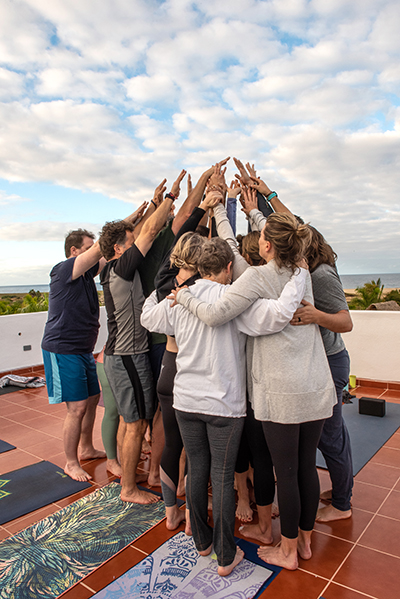
In her work, the starting point is intentionally simple. Instead of dissecting thoughts, clients are invited to notice sensation: the rhythm of their breath, the feeling of their feet on the ground, the temperature of water on their hands. These practices show up in group sessions, retreats, and workplace workshops—spaces designed to feel more human than clinical, where people can begin to reconnect in real time.
“I’ll ask someone, ‘How many miles per hour is your nervous system traveling?’—and they know exactly what I mean,” she says.
From there, the shift becomes tangible. Emotions move out of abstraction and into awareness—no longer ideas to analyze, but physical experiences to notice and navigate. Anger shows up in the chest. Grief settles low in the body. The work becomes less about fixing and more about recognizing what’s already there.
For one client, that shift changed everything. After years of abuse, she had come to believe she was broken—that healing meant learning how to survive, not thrive. Through this body-based approach, the work moved away from retelling the story and toward safely reconnecting with sensation, one step at a time.
“No one should have to pay for what happened to them for the rest of their life,” Taylor says.
Over time, the client began to experience the felt truth that she wasn’t broken. She was whole and always had been.
The changes that follow this kind of work aren’t dramatic or immediate. There’s no sudden before-and-after moment. Instead, they build gradually—a difficult conversation handled with more steadiness, a wave of anxiety that rises without taking over. The work is subtle, but no less powerful.

“We don’t need more information,” Taylor says. “We need courage.”
Much of that courage is developed in relationship. Whether in group settings, workplaces, or retreats, people begin to experience a sense of shared humanity that often feels unfamiliar at first. It’s not just about understanding themselves—it’s about recognizing that others are doing the same work, navigating the same complexity of being human.
Eventually, there comes a point where Taylor knows it’s time to step back. The goal isn’t to eliminate hardship, but to build the capacity to move through it with awareness—to trust that the tools are already within reach. And for those waiting to feel ready, she offers a quiet reframe. “Readiness is not a feeling—it’s a decision,” she says.
Because in the end, the tools themselves are simple. They always have been.
For more information, visit humanityshared.com.