Lifelong Learners
04 Aug 2026
How older adults across Boulder County are embracing lifelong education to stay connected, curious, and engaged
Aug/Sept 2026
Written By: Lu Snyder | Images: Boulder County Parks & Open Space
Ask Anne Heinz what she loves about retirement, and her answer may surprise you: becoming a student again.
“I was too busy with work and family to take classes until retirement,” she says.
Anne, the former dean of Continuing Education at the University of Colorado, has taken classes at the university regularly since she retired 15 years ago. At 71, she is significantly older than most students in class, but thanks to the school’s auditing program, through which older adults can take classes at a discounted rate, she is part of a community of older students.
“I feel really grateful that I can take courses at the university,” she says. “We have wonderful faculty, and it’s good to stretch ourselves and learn new things.”
Anne especially enjoys taking classes with her husband, Ran Yaron. The pair have taken classes on a wide range of subjects, including history, art history, cognitive psychology, and U.S.-China relations. Auditors can take classes on almost any subject—as long as there is room in the class—for a flat rate. Some folks audit classes as they contemplate a career change, allowing them an opportunity to explore that subject or industry before committing, explains Blazey Heier, director of student services in CU’s Continuing Education department. Seniors can audit classes at a steeply discounted rate. Classes are available both online and on campus, though most auditors, like Anne and Ran, prefer to study in person. Doing so creates opportunities for new connections and friendships.
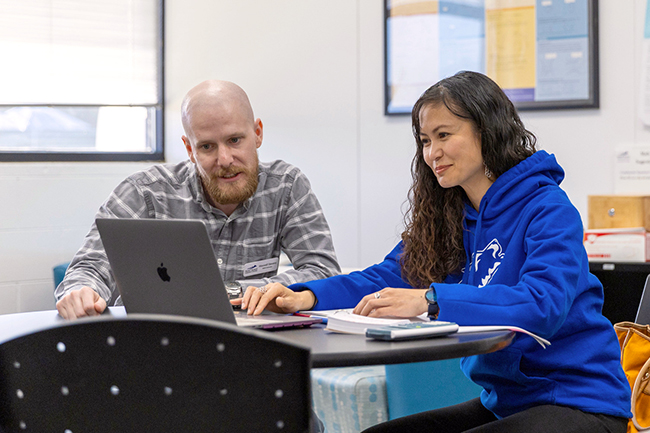
“I love being on campus,” Anne says. “I love interacting with students. I really feel it’s very good for my mental health.”
Eric Klinger, CU teaching professor, gets to witness those connections in his intergenerational writing class. The class structure is unique: half the students are traditional college students, while the other half are community members, ages 60 and up. Each student is paired with a community member for the duration of the class, during which they interview each other to write a biographical sketch of their partner, offering an intimate glimpse into the struggles—and similarities—of another generation.
“It’s a very powerful experience,” Eric says. “We enter the room as strangers and leave as friends. The relationships they develop in the class very often persist long after the class is over.”
After 10 years teaching this class, Eric believes curiosity is the key to engagement. His community members—even those nearly 90 years old—are still inquisitive and eager to grow. And that inquisitiveness keeps those folks vibrant and flexible.
“I think curiosity feeds not only their desire to learn, but also their willingness to connect and adapt to new things,” he says. “We know from research that those things have a major impact on our longevity, our cognitive abilities, and our sense of happiness.”
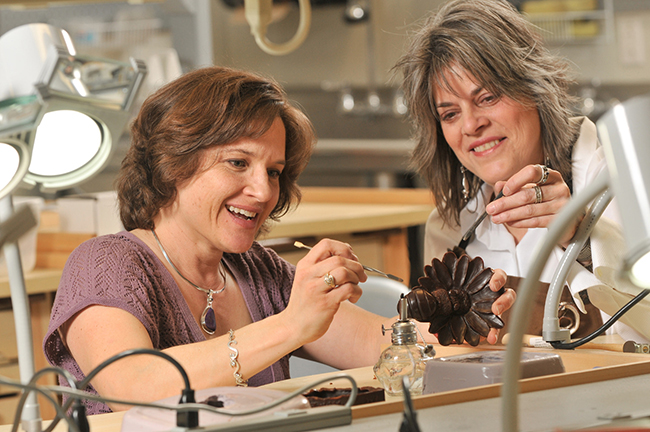
Fortunately, there are innumerable ways for older adults in Boulder County to expand their knowledge and skills—even beyond university classes. The Boulder Public Library, for example, offers both structured and informal opportunities where adults can explore their creativity, build practical skills, improve literacy and language skills, and interact with others.
“We provide learning opportunities in many formats so patrons can continue to grow, explore, and stay engaged at every stage of life,” says Sydney McCoy, public services director at the Boulder Public Library. “When adults continue learning, they are not only gaining new information or skills, they are also building confidence, staying curious and connecting with others who share their interests.”
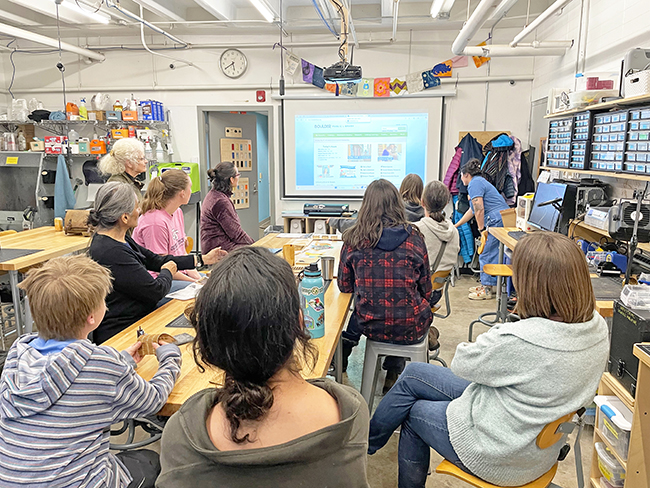
Older adults are an integral part of the education and outreach team at Boulder County Parks & Open Space. Volunteers in the natural history program undergo in-depth training. Field experts share information about birds, wildlife, and the geological history of Boulder, which volunteers will then share with the public as they lead nature hikes and give educational presentations at schools, libraries, and community centers across the county.
Many of the volunteer naturalists who work with Carlos Lerma, the natural history program coordinator with Boulder County Parks & Open Space, are retired and in their 70s and 80s. They tell him their volunteer work keeps them active and engaged.
“A lot of them say that if they stop learning, they stop growing,” Carlos says.
Home to CU, Front Range Community College, the National Oceanic and Atmospheric Administration, the National Center for Atmospheric Research, and many world-renowned companies, including Google, Boulder County has cultivated a community driven by curiosity and a sense of discovery.
“You’ve got a lot of people who are drawn to the area because of its physical beauty, but they are hard-wired to learn,” Anne says. “I think we need to have that human connection and continue to learn. Why are we here otherwise?”