Lobbying for Retail
03 Aug 2026
A Boulder entrepreneur is redefining luxury resale by turning destinations into wardrobes—and hotel lobbies into gateways to local culture
Aug/Sept 2026
Written By: Heather Shoning | Images: Lotwear
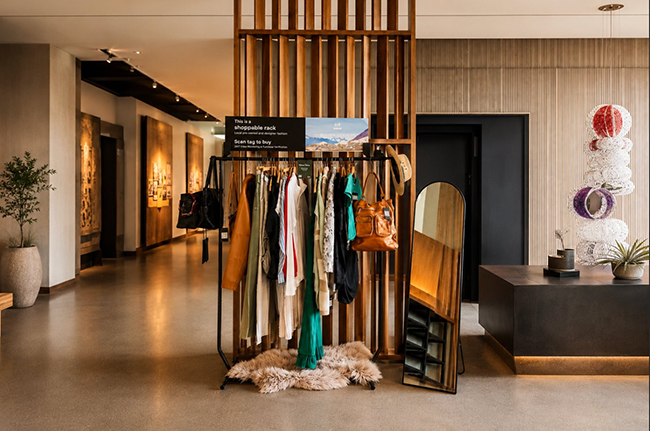
Walk into almost any hotel lobby, and you’ll find the same predictable lineup: a front desk, a coffee bar, a few lounge chairs, and maybe a grab-and-go market stocked with bottled water and snacks. Allison Kent-Smith sees something else entirely—opportunity.
Not for another boutique or gift shop, but for what she calls ambient retail—carefully curated collections of luxury resale fashion that live in the background of places people already want to be.
“The racks really aren’t about being a pop-up,” says Allison, founder and CEO of Boulder-based Lotwear. “It’s about an install—what I call ambient retail—where retail is in the background of where you are in third spaces.”
At first glance, the concept seems almost deceptively simple. Install a rack of luxury resale clothing in a hotel lobby, coworking space, or other gathering area, allowing guests to browse and purchase pieces with nothing more than a quick scan of a tag.
But that description misses the point. Lotwear isn’t just about selling clothing. It’s selling a connection to a community.
Allison didn’t arrive at the idea through fashion. She spent more than two decades in technology, marketing, and digital transformation, studying how consumers interact with brands and how purchasing patterns shape business. Watching her teenage daughter embrace resale shopping sparked her interest in a market growing at four to five times the rate of traditional retail, but it was her understanding of travel behavior that transformed curiosity into this fresh business model.
“More than 80 percent of people buy clothes when they travel,” she says. “It’s a thing that we do to connect to the place and feel like we’re part of the place.”
That observation became the foundation for Lotwear—destination-driven curation. A rack in Boulder shouldn’t look anything like one in Manhattan. Although luxury national brands such as Coach, Frye, Show Me Your Mumu, Faithfull the Brand, Patagonia, Bugatchi, and many more are on the curation list, each collection reflects the character of its community, blending sought-after luxury labels with the style, pace, and personality of the people who actually live there. Visitors aren’t just buying clothing—they’re buying into the experience of the destination. Additionally, Allison is in discussions with leading local brands to serve as sponsors and showcase their products on the racks.
“The most important thing to think about is, are we styling for the place that the rack sits?” Allison says. “If you’re traveling from Florida and you land in Boulder, there’s a different vibe. If the rack matches the location, then the style is something that someone wants. ... The clothes tell stories about the place.”
That philosophy extends well beyond the garments themselves. Some pieces include tags suggesting a neighborhood coffee shop or local destination, encouraging travelers to experience the community through the local eyes—and wardrobe—of the people who know it best.
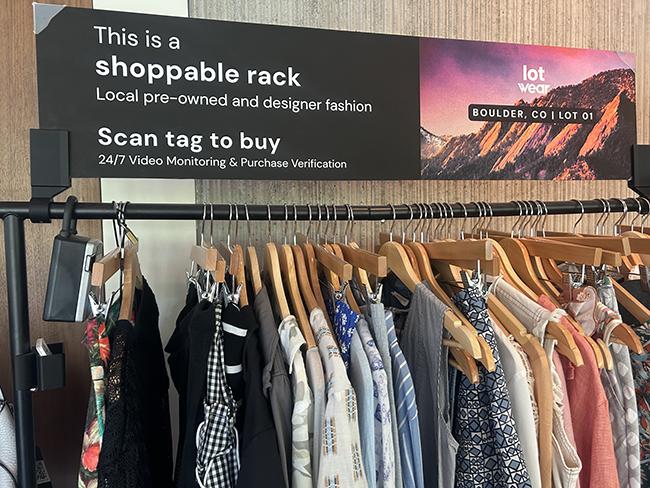
It’s an important shift. Rather than offering another collection of generic souvenirs, Lotwear invites visitors to step into the aesthetic of a city. The luxury brands matter, but only because they authentically reflect the community’s identity. The goal isn’t to impress travelers with designer labels; it’s to help them feel like they belong.
That same commitment to authenticity drives the company’s growth strategy.
Instead of relying on a centralized buying team to stock locations across the country, Allison is building a network of local curators who understand their own communities better than anyone at corporate headquarters ever could.
“It really has to feel like the place, and you can only do that effectively if you live there and you understand the people,” she says.
As the company expands, Lotwear will secure hotel and venue partnerships, while curators source luxury resale pieces, maintain the collections, and continually refine them to reflect the rhythm of their cities. Looking ahead, Allison sees franchise and licensing opportunities that preserve local perspective while providing the technology, commerce platform, and brand standards behind the scenes. It’s an approach that allows the company to grow nationally without sacrificing the very thing that makes it distinctive.
The market’s response suggests she’s onto something.
Lotwear's first installation at Moxy Boulder University sold nearly 70 percent of its inventory within four days. Guests embraced the self-service model almost immediately, scanning tags, purchasing pieces, and, perhaps most tellingly, asking when the concept would arrive in their hometowns.
“We were like, ‘Are people going to get this?’” Allison recalls. “People were tracking me down for my phone number and asking when we were going to be in their city. From a three-time startup founder, the market pull was something I’d never seen before.”
Today, Lotwear has expanded to multiple hotels, including Moxy Cherry Creek, The Buxton Hotel in Fort Collins, and Thompson Central Park in Manhattan. But hotels are only the beginning. Coworking spaces—racks will be in Kiln coworking spaces soon—, mixed-use developments, and other high-energy gathering spaces all fit Allison’s broader vision of bringing thoughtfully curated retail to places where discovery already happens naturally.
In an era when so much shopping has become algorithmic, predictable, and disconnected from geography, Lotwear offers a compelling alternative. It suggests that where we buy something can matter just as much as what we buy—and that the best retail experiences don’t compete with a destination.
They deepen it.
Learn more at lotwear.com.