Not Horsing Around
02 Feb 2026
Equine-assisted learning at Gray Mountain Ranch is “a direct route to hearts and attention”
story Holly Bowers
Emily Dusel credits horses with reviving her. Although she loved horses growing up, she took a 25-year hiatus to become a mom, pursue entrepreneurial roles, and lead nonprofits. It wasn’t until a period of burnout that Emily returned to the stables, where she found exactly what she needed.
“My nervous system healed,” she says. “I found community. I found inspiration.” Working with horses again led her back to herself and ultimately to connections that would define the next chapter of her life.
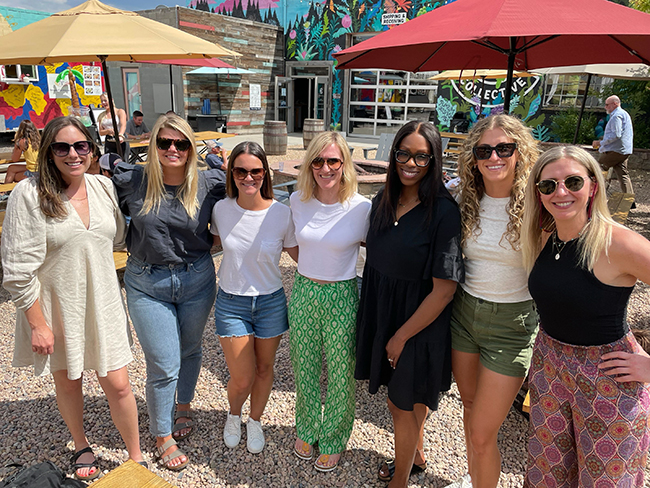
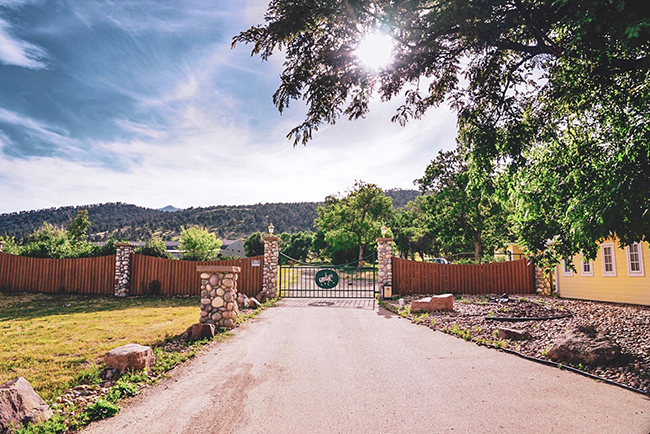
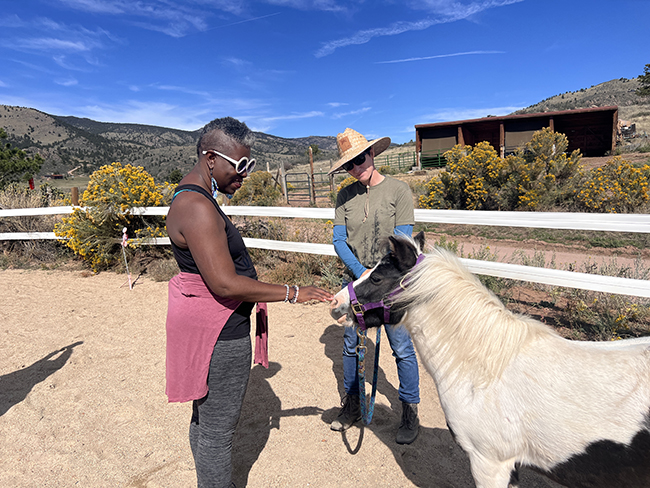
Today, Emily lives with her family on the 40-acre Gray Mountain Ranch in Lyons, where she keeps two geldings and two mini horses: Auggie, Sundae, Popcorn, and Buster. She offers equine-assisted learning through leadership development workshops and executive coaching. It’s through this work that she met Angela Chiarenza and Jan West, her future business partners in Gray Mountain Group.
The three met through a certification program—they’re all licensed and certified equine-assisted learning practitioners—and began working together to facilitate leadership development through another organization. Their connection was fast and strong, and it didn’t take long to realize they were onto something. “We called it going toward the warmth,” Emily says of their decision to form Gray Mountain Group and start offering equine-assisted learning programs on their own.
Equine-assisted learning is a form of hands-on leadership development inspired by how horses adapt and thrive as a herd. It is not the same as equine therapy. Angela, Emily, and Jan follow an ethical code as coaches certified by the International Coaching Federation. Their programs rely on the communication of horses to help people experience heightened awareness, increased confidence, the opportunity to try something new, and, often, unbridled (pun very much intended) joy. Participants may integrate those experiences into their lives in the form of greater community awareness, clearer communication, and increased confidence.
The horses are partners in this facilitation. As participants go through different exercises, the horses provide real-time, honest, non-judgmental feedback. Learning moves from theory into the body as participants engage with the horses and tap into all their senses. It’s a far cry from conference rooms and slide decks, and that’s exactly what makes it stick.
Emily shares an example that stands out to her from a recent workshop with a leadership team from a technology company. She was instructing team members on how to say hello to their equine partner. There are several ways to do this, she explains, from putting a hand on the horse’s shoulder or head to “sharing breath,” or going nostril-to-nostril with the horse. One of the people in Emily’s group wanted to share breath with the horse but admitted to being terrified. That’s when the horse took a deep breath and sighed. Suddenly, everyone watching did, too. The fear and tension dissipated.
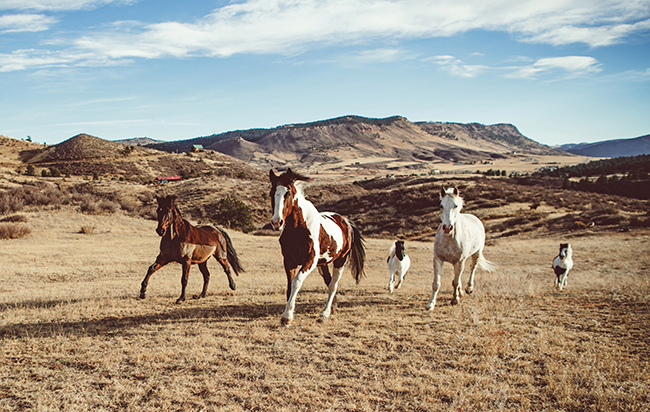
One of the participants shared afterward how powerful it was to witness that vulnerability and remember that true connection with their team can only happen if they can share and be authentic. Without that honesty, the team can’t move forward together.
That’s exactly why equine-assisted learning is so powerful, Emily says. “Humans always glorify lions and the predators, but we forget to value prey animals” like horses, she explains. “They have an incredible ability to pay attention to others in the environment and to communicate non-verbally, sense emotion, and reflect feedback immediately.”
Gray Mountain Group integrates International Coaching Federation and Equine Experiential Education Association (E3A) principles in its coaching work. Safety is paramount, both for human participants and their horse partners. Horses are social animals and are naturally curious about people, but Angela, Emily, and Jan still spend a lot of time before a session ensuring that the horses are interested and willing to engage. And participants with different comfort levels are welcome. “You can learn as much watching around the outside as you could being the person in the arena,” Jan says.
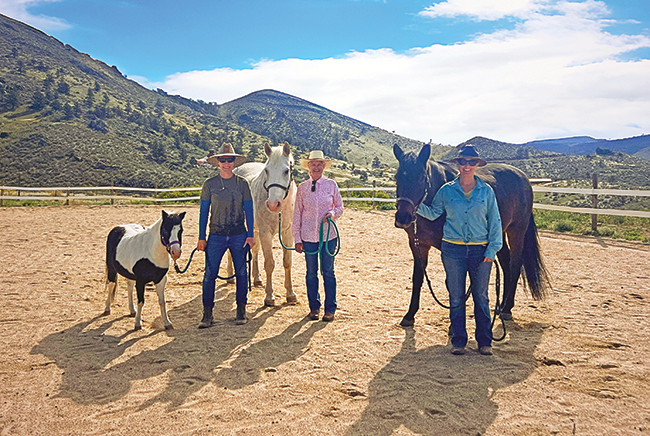
The individual and team development work that the three coaches facilitate naturally resonates in their own lives, as well. Gray Mountain Group hosted its first corporate training on Emily’s ranch this summer. One participant noted that watching the three collaborate was itself a great lesson in teamwork. Moving forward, the group is eager to work with people who are curious and open-minded about equine-assisted learning, from C-level entrepreneurs and big businesses to grassroots organizations and marginalized communities closer to home.
While all three believe strongly in the impact of their work, Angela puts it most simply: “It’s the best. I can’t say it much more succinctly than that.”
For more information, visit graymountainranch.com.