Root to Rise
01 Apr 2026
Boots-in-the-dirt volunteers give native plants a fighting chance
WORDS Lisa Blake
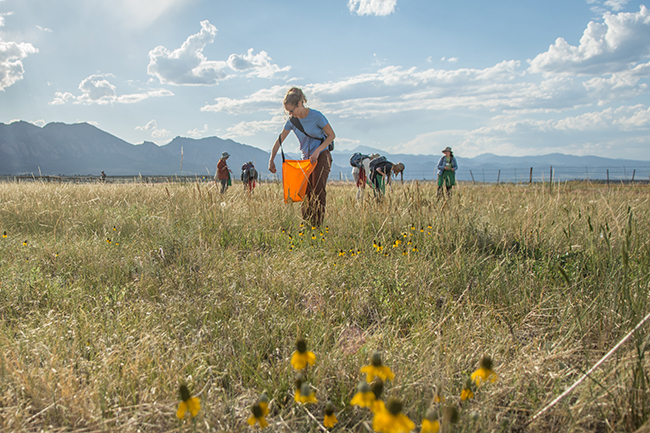
Seeds start it all. And, in an era of climate anxiety, water waste and limits, biodiversity loss, and severe pollinator decline, native plant seeds are gold.
Status symbol Kentucky bluegrass lawns and sprawling campus greens are being swapped for more ecologically sound landscapes. Neighbors are sharing native seeds from converted gardens. Groups like Wild Ones Front Range, EarthLinks, the People and Pollinators Action Committee, and the Colorado Native Plant Society are hosting wildly popular native plant swaps and seed collecting events. Colorado communities are coming together over a deep desire to connect to the lands they love.
“A gift of seed can open a whole new world for people,” says Colorado Native Plant Society executive director Maggie Gaddis. “They can become scientists in their gardens, grow more seeds to cultivate more community.”
This phenomenon, Maggie says, is unfolding across the state, with a growing number of Boulder County volunteers propelling the movement forward. Here, we dig in with the action takers who are painting landscapes with native plants, educating others, and bringing us back to our roots.
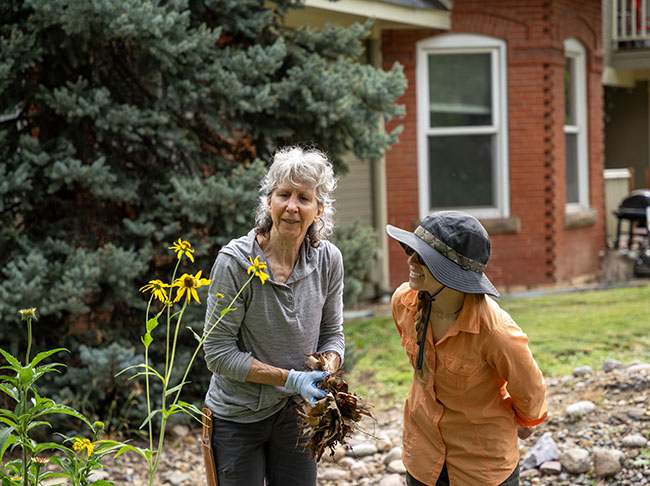
“The more we learn about nature in our backyard, the more we can develop a new appreciation of where we live, and how to better take care of it.” –Paul Alaback
Former forest ecology and biology teacher Paul Alaback retired 15 years ago and now spends a good chunk of time volunteering on projects that help people better appreciate their local environment. The 72-year-old Boulder resident is consistently inspired by how volunteers from many walks of life, with diverse experiences and perspectives, share a common interest in bringing nature back to urban settings.
“In these challenging times for our beleaguered planet, it can be really satisfying to be working on something positive,” Paul says. “Bringing nature back to our neighborhoods by growing native plants is something we can all contribute to.”
Native plants help us conserve water, provide habitat for pollinators and other wildlife, and can even help reduce the flammability of our city, Paul explains as he encourages families to get involved and spark children’s interest in nature.
“You do not have to be an expert or even be an experienced gardener,” he says. “Once you have established your plants, it can be even easier and less expensive to maintain than a more traditional landscape.”
“Water is expensive, and it’s taking more to keep lawns green around here.” –Carrie Cimo
With record-low snowpack and record-high summer temps meeting a dwindling Colorado River water supply—not to mention the largest wildfire in Boulder County history, the CalWood Fire, and the most destructive wildfire in Colorado history, the Marshall Fire, both occurring in the last six years—Boulder County residents have every reason to jump on the native plant bandwagon.
“I think those that are plugged into climate science may also be aware of the tenuous water situation with the Colorado River,” says Carrie Cimo, a plant ecologist and volunteer coordinator with Boulder County Parks & Open Space. The department has been collecting and using native seed in ecological restoration for more than 25 years, and its volunteer program has grown substantially in the last 15 years, reaching hundreds annually.
“We know that this river is over-allocated and the current usage of this water body is not sustainable under current use patterns, especially as climate conditions continue to change,” Carrie adds. “This is where native plants and their adaptability to drought conditions can really shine.”
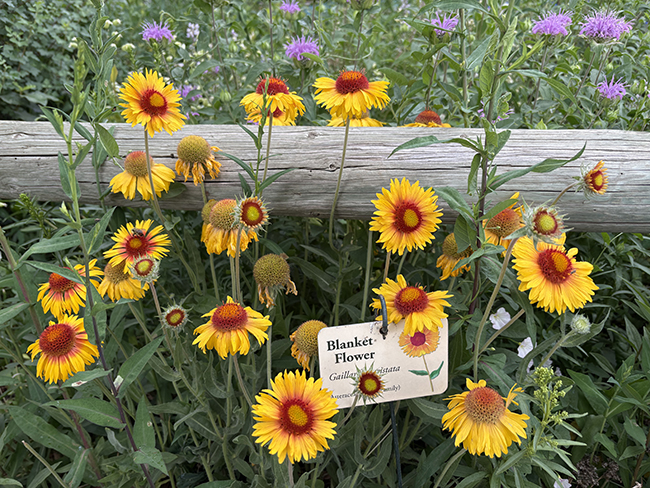
“I find this rewarding, be it seed collecting, seed cleaning, planting, or tending desirable plants, or removing weedy undesirable plants.” –Margaret Paget
Margaret Paget has been gardening on the Front Range for more than 40 years. She says native plants help our local communities by reducing the need for chemical applications, including fertilizers, reducing water use, and supporting native ecosystems.
The 69-year-old Broomfield resident holds a Bachelor of Science in natural resource management and spent 25 years coordinating and supervising municipal-based programs, including open space, horticulture, and forestry. The open space and wildlands restoration volunteer urges others to skip cultivated annuals that cannot survive Colorado winters and to use self-seeding native plant annuals or perennials instead.
“They may be more expensive to purchase initially, but there are now several native seed and plant exchanges,” Margaret says. “Dividing and sharing not only native plants and their seeds with other volunteers but also your knowledge helps establish great gardens and connections within the community.”
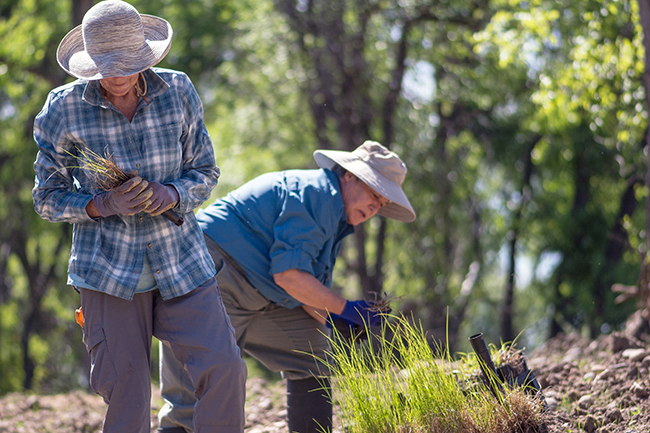
“More people are realizing that our yards do not have to look like golf courses.”–Blanche Deren
When Blanche Deren moved to Longmont in 2018, she had to obtain special permission from her neighborhood HOA to remove sod and install waterwise landscaping.
“As we rebuilt our backyard, some neighbors were very curious, some neighbors thought we were very brave, but one unhappy neighbor told us that we were ‘ruining the property values in the subdivision,’” Blanche says.
Blanche, 70, has participated in sod removal and Waterwise Yard Seminars from Resource Central and volunteers at the Peck Native Seed Garden. As a Michigan transplant, she says the concept of “winter watering” was foreign to her.
“I wanted my landscaping to save a lot of water, produce colorful and thriving perennials, invite pollinators, and be beneficial for insects and birds,” Blanche says. “I’m really happy to see that things are quickly changing in communities all around us. More are accepting that native and regional plants, shrubs, and trees are more resilient, use fewer resources, and have an optimum positive environmental impact.”
“People want hopeful actions to take to build resilience on a local level. With inaction at the federal level, local is king in the climate resilience space.” –Lauren Freels
City of Boulder Climate Initiatives Department sustainability senior program manager Lauren Freels points to our digital world’s desire to connect to each other and the land around us.
“I think it’s potentially a reaction to modernist aesthetics and the very online world,” she says. “What is more authentic than a native plant?”
To Lauren, this movement looks like the city-sponsored nature-based solutions initiative, Cool Boulder, working to build a network of partners. It’s partnering with CU scientists, international and state organizations, and the Butterfly Pavilion to curate a Neighborhood Nature Lab. It’s spurring more action through a new Climate Resilient Landscapes Showcase initiative.
“In every one of those spaces, we’re looking to create a community of practice that includes students, volunteer groups, designers, contractors, community members, and scientists,” Lauren says. “Because we’re all in this together.”
Get involved
Boulder County Parks & Open Space
bouldercounty.gov/departments/parks-and-open-space
Colorado Native Plant Society
conps.org
People and Pollinators Action Network
peopleandpollinators.org
Wildland Restoration Volunteers
wrv.org
Wild Ones Front Range
frontrange.wildones.org