The Fighter and the Filmmaker
02 Dec 2025
Bruce Grossman’s “Easton” captures a Boulder icon
By Lexi Marshall
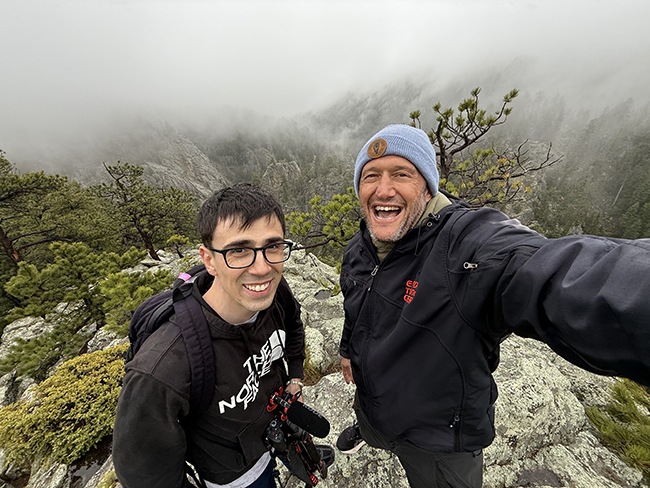
The first thing you notice about films by Bruce Grossman is the rawness. His films aren’t polished in the Hollywood sense—they’re stitched together from grit, sincerity and whatever wild visual inspiration he’s channeling from Scorsese or David Lynch that day. He describes his style as “black and white gritty art house” mixed with guerrilla DIY sincerity, but he’ll also tell you flat-out, “I don’t do sensationalized stuff. I try to tell stories that are very heartwarming and make the subject of my films seem, you know, as if they’re a superhero.”
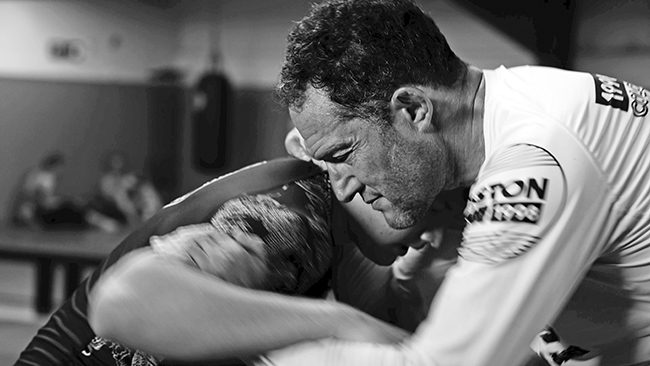
His latest project, “Easton,” takes that ethos and points it directly at one of Boulder’s most influential figures: martial artist and Brazilian jiu-jitsu academy founder Amal Easton.
From the Bronx to Boulder
Bruce’s journey to filmmaking is almost as cinematic as the films he makes. Raised in the Bronx, he lost his father young and essentially raised himself while navigating his mother’s severe mental illness. At 18, he was working two jobs to pay for college, convinced he’d become a writer. “My dad used to force me to read books and write book reports,” he recalls. “So, I went to college to study literature with teaching basically being the ‘this is what I’m going to do to pay the bills until I write this book everyone tells me I’m going to write.’”
But teaching in inner-city New York wasn’t the right fit. “I didn’t even like being in high school when I was a kid. Why would I want to go back for the rest of my life?” he says. Instead, he picked up a camera at 24 and never put it down.
In 2017, Bruce left New York for Boulder with two duffel bags and no experience west of the Hudson. “I had never been on a plane before. I had never been out West, never really left New York at all. I packed everything into two duffel bags, and I came out here in June 2017, right before I turned 27.”
Here, he says, he learned how to truly live. “Where I’m from, it’s more of a struggle to survive than actually being free and waking up every day and breathing fresh air.”
Finding Amal
When the pandemic upended his restaurant job, Bruce started cleaning mats at Easton Training Center in Boulder just to get in the door. Soon, he was running the gym’s social media, experimenting with video and catching the attention of Amal Easton himself. “I did this one video, and Amal sent a message to the Instagram: ‘Who’s responsible for this?’” Bruce remembers. “I said, ‘It’s me, sir.’ He goes, ‘Excellent work, excellent work. If you ever need anything, let me know.’”
That encouragement planted the seed for “Easton.” At first, Bruce intended only to shoot an interview or a short feature. But one afternoon at Amal’s house changed everything. “He had a ton of old photos, beautiful pictures of his upbringing,” Bruce says. “Then he says to me, ‘I’ve also got these tapes.’ He shows me this giant bin he hadn’t looked at in like 30 years.”
Inside were hours of rare footage: a young Amal in Brazil, training with the legendary Gracie family, competing in São Paulo, and living in the houses where Brazilian jiu-jitsu was being shaped before it exploded globally. Bruce knew immediately this wasn’t simply an interview. He had the makings of a film.
The Making of “Easton”
The result is a portrait not just of a martial artist, but of the community he built in Boulder. “Most people who train at Easton have no idea about him at all, in terms of who he is as a person,” Bruce says. “You’re seeing him as a young man in Brazil, you’re seeing the camaraderie, the competitions. That stuff is the heart. My filmmaking just provides a frame for it.”
One of the film’s most striking scenes shows a student shadowboxing to dreamlike music, then cuts to Amal perched on the edge of Dream Canyon, the world sprawling beneath him. “He literally says he sometimes has to stop himself from stepping forward, because he wants to know what it’s like to fly,” Bruce says.
The film ends on another image Bruce fought for: Amal riding off on his motorcycle, a surreal callback to Daft Punk visuals and a symbolic sendoff. “I wanted everything in this to be kind of like a tribute to the man and an inspirational piece for the students,” he says.
Amal’s Story
For Amal, the project has been a chance to reflect on a life devoted to martial arts. He grew up in New Mexico, often the smallest kid in class, and started training to build his confidence after being bullied. After high school, he went all-in—moving to Rio de Janeiro for nearly four years to train with the Gracies.
In 1998, he relocated to Boulder. “It was within the first couple of months of living here that I started teaching,” Amal says. That academy has since grown into one of Colorado’s premier martial arts institutions, with multiple locations and thousands of students who see Amal not just as a teacher, but as a pioneer.
What Comes Next
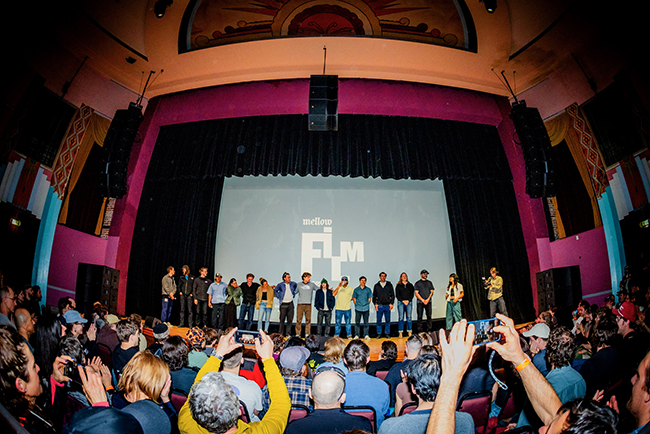
Bruce has submitted “Easton” to festivals including Sundance, Boulder International Film Festival, and Big Sky. His dream is to bring the film home for a local charity screening, much as he did with his debut project, which raised more than $2,000 for a Denver nonprofit.
For both filmmaker and subject, though, the film is ultimately about community. As Bruce puts it: “Martial arts is this non-cynical space where people who maybe didn’t grow up the most confident can come here, find friends, and be around like-minded people. Seeing students tell me they cried watching this—it makes me proud of what we’re doing here.”
Amal echoes that sentiment simply: “I’ve always believed martial arts can change people’s lives. If the film shows that, then I’m happy.”