The Things We Carry
02 Jun 2026
Because love is love
Written By: Heather Shoning
My uncles, Tom and Pat, shaped my understanding of resilience, humor, loyalty, and chosen family more than they probably ever realized, even though I wasn’t especially close to either of them growing up.
They mostly lived away from our family, and when I was young, I was probably too self-absorbed to fully understand what they were navigating or what it cost them to move through the world as gay men in that era. Only later did I begin to understand the weight of what their generation carried, living in a time when simply existing openly as a gay man could cost you your job, your safety, your housing, your relationships, or your future.
But what’s important—and what I think deserves to be said clearly—is that neither of them stayed hidden forever. Both eventually found places and communities where they could fully embrace who they were. Pat found that in Boulder, a place that allowed him the freedom to live more openly and more honestly than much of the world had previously permitted. They built lives, friendships, and identities that were real and fully their own, even if getting there required navigating years of caution first.
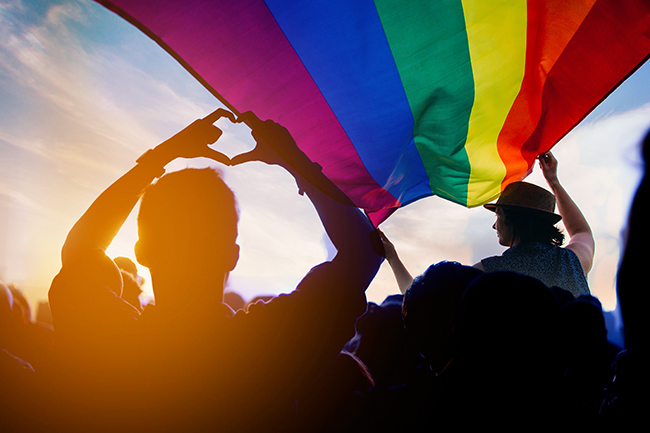
When we talk about Pride now, it’s easy to focus on the celebratory aspect. The color. The music. The parades. The joy. And honestly, I’m glad for that. We should celebrate joy. We should celebrate visibility. We should celebrate young people growing up in a world where being themselves is increasingly met with support instead of silence.
But I also think about the people who carried us here. The people who fought battles they didn’t always get credit for while trying to build ordinary lives at the same time.
My uncles were part of that generation. And like far too many gay men of their era, both eventually succumbed to AIDS in the 1990s.
I still grieve what they endured—not just the illness or the loss itself, but the years spent hiding pieces of themselves to make other people comfortable. I grieve how much energy went into caution, into trying to stay safe in a world that often treated authenticity like a threat.
And if I’m being truthful, I still don’t think I’ve fully processed it.
But here’s what I know.
I wish my uncles could see this moment.
I wish they could walk through downtown Boulder during Pride Month and see rainbow flags hanging openly in storefronts instead of hidden behind closed doors. I wish they could see married couples introducing each other without hesitation. Teenagers feeling safe enough to come out earlier. Communities showing up publicly and loudly in support.
I wish they could see how many people now understand that love is not something requiring permission. We have come far, and that progress matters.
Equal rights are still unevenly protected. LGBTQ+ people are still targeted politically, socially, and culturally in ways that should concern all of us—not just because of policy, but because of what it reveals about who gets to feel safe being fully visible.
Pride was never just about celebration. It was—and still is—about insisting on humanity. And maybe the clearest evidence of how much has changed exists inside my own family. Both of my daughters have loved both men and women, and in our immediate family, it has never felt necessary to turn that into a larger conversation or attach rigid labels to it. It simply is what it is. Because love is love.
That kind of ease would have been unimaginable for so many people of my uncles’ generation.
And that’s the part I carry with me.
Not just the memory of my uncles, but the understanding they left behind. The reminder that progress doesn’t happen accidentally. It happens because ordinary people decide that hiding is no longer acceptable. Because people risk comfort to demand something better.
Tom and Pat were funny, smart, creative, complicated, deeply human men. They deserved more time. More openness. More ease. More ordinary moments lived without fear.
I can’t change the era they lived through. But I can remember them fully. And maybe that’s part of what Pride asks all of us to do. Not just to celebrate how far we’ve come, but to remember who carried the weight of getting us here in the first place.
My uncles left me both grief and gratitude, but they also left behind something else: proof that the world can change.
Today, my daughters move through their lives with the freedom Tom and Pat deserved to have all along. They love who they love, openly and without apology, and in our family, that’s never been treated as something requiring explanation.
It’s simply love. And I think my uncles would have been very happy to see that.