Boulder's Pride Roots
02 Jun 2026
From Clela Rorex to the next generation, Boulder County has built an infrastructure of inclusivity
Written By: Lexi Marshall
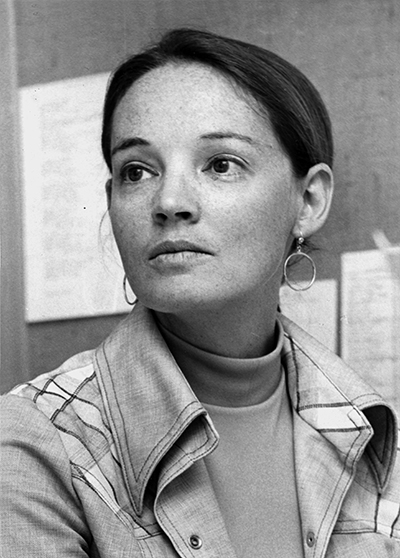
On a spring morning in March 1975, two men from Colorado Springs walked into the Boulder County Clerk’s Office and asked a simple question: Could they get a marriage license?
Clela Rorex, newly elected as Boulder County Clerk and Recorder at just 31 years old, did what most of her peers across the country would not. She consulted the assistant district attorney, confirmed there was no Colorado law standing in her way, and issued the license. Then she issued five more.
“After having been so deeply involved in the women’s rights movement,” Rorex said in a statement released by Boulder County, “who was I to then deny a right to anyone else? It wasn’t my job to legislate morality.”
It was a decision that came with a price. Colorado’s attorney general eventually ordered her to stop. Rorex faced backlash, threats, and sustained political pressure, and in 1977, she resigned—approximately two and a half years into her term. She never held elective office again, but remained an ally to the LGBTQ+ community throughout her life. She died in June 2022 at 78.
But not before Boulder had become, however briefly, a beacon for something the rest of the country wasn’t ready to name—and not before her actions left a mark that would take decades to fully recognize. It proves that Boulder County’s relationship with queer rights is not incidental. It is foundational.
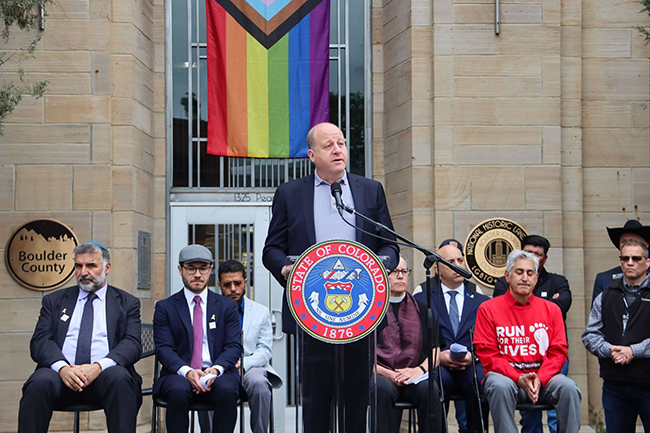
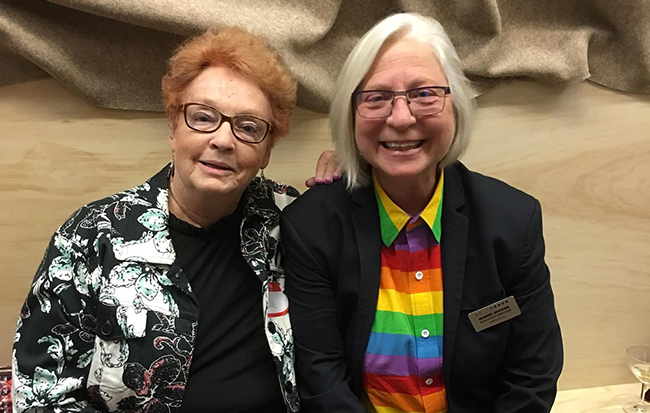
Mardi Moore (she/her), chief executive officer of Rocky Mountain Equality and a friend of Rorex, has watched that legacy compound over time. “Her impact is still felt in Boulder County today,” Mardi says. “Last year, the courthouse was designated a national historic landmark because of what she did more than 50 years ago, and the Museum of Boulder honored her and other LGBTQ+ historic figures in its ‘Bending the Arc’ exhibit. She remains a testament to what one person can accomplish by standing up for what is right.”
A Legacy You Have to Choose to Carry
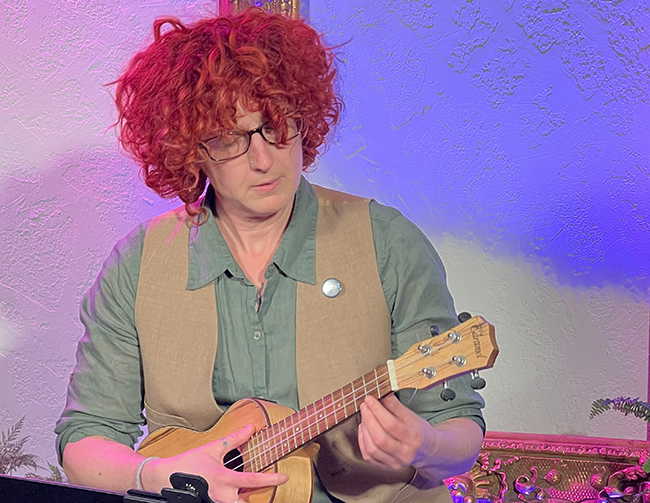
For Aimee Herman (they/them), a writer and educator who moved to Boulder County four years ago from New York City, the courthouse’s new status matters—but only as much as residents choose to make it matter.
“Definitely,” Aimee says when asked whether the Rorex legacy feels present in today’s community. “And now more than ever, it is so important to know about all of our queer and trans elders who fought for us.” Aimee points to figures like Audre Lorde, Sylvia Rivera, Marsha P. Johnson, Cecilia Gentili, and Miss Major Griffin-Gracy—a lineage of activists who built a movement while often being denied its protections.
In Boulder County, Aimee has also seen a growing network of queer creatives and organizers carving out space through open mics, literary events, comedy shows, and book clubs. Still, they note, there is always a hunger for more.
Aimee runs Pen and Power, a biweekly writing workshop at Butterscotch Studios in Longmont, a queer- and female-owned space, that centers vulnerability as a survival strategy. “Those who are continually marginalized by society are the true superheroes,” Aimee says, “because we refuse to back down. We refuse to be silenced. We refuse to hide.”
The workshops cover memoir, narrative poetry, and sex positivity. They are also, by Aimee’s description, life-saving. “Having spaces to talk openly about our identities, our queer lineage—celebrating sex positivity and unraveling the traumas within us through writing—is a way to take up more space and remind those who are still trying to find their way out of the drown that we can survive.”
Aimee is clear-eyed about the limits of Boulder’s progressive reputation. They point to the city’s demographics—overwhelmingly white, increasingly expensive, with a growing class divide that undercuts any easy claims to welcome. For Aimee, true inclusivity requires material conditions: affordable housing, accessible arts, public assistance. Without those foundations, the progressive branding rings hollow.
That critical perspective is itself a form of care. “As an organizer of queer-centered events, it is important to me to make sure these shows and writing workshops are affordable. No one is turned away.”
Stitched Together
At the Firehouse Art Center, another kind of survival is being stitched together, literally.
Slay the Runway is a Firehouse Art Center fashion design program offered at no cost to LGBTQ+ youth and youth allies, aiming to be a safe space for teens to explore their true style in a gender-expansive, supportive community. The program runs cohorts in both Longmont and Boulder, in partnership with the ATLAS Institute at the University of Colorado (CU) Boulder, and culminates in a runway show featuring participants’ original designs.
Elaine Waterman (she/her), Firehouse Art Center’s executive director and the program’s founder, traces its origins to a student she encountered while teaching fashion design at the Longmont Museum—a young drag performer whose courage and creativity made one thing obvious: The tools to express yourself were not equally available to everyone.
“I was inspired,” Elaine says, “and saw that finding clothing that represented your true persona was difficult for young teens exploring gender and self-actualization.” Early workshops focused on restyling and refitting found garments, a practice that remains central to the program’s approach.
The artwork and process of “Slaying the Runway,” in Elaine’s words, is structured around three moments: “The creation of the ‘look’ is the identity, the walk down the runway is the expression, and the attendance of friends and family is the celebration.”
The emotional transformation Elaine describes in her students is slow and non-linear, which is exactly the point. Participants begin with a “Restyle” project, modifying a thrifted garment before attempting anything from scratch. Many students with severe anxiety spend their first year creating but not walking. Then they walk quickly. Then, sometimes in their third year, they perform.
Elaine’s own child is among the program’s alums, having gone from refusing to participate at all to adding a few buttons to an existing piece to eventually presenting three complete looks on the runway. “I think that the participants don’t realize the joy that can come from creating,” Elaine says, “and it becomes kind of addictive once they see what they can do.”
As both an educator and a parent of a nonbinary teen, Elaine has shaped the program to prioritize mental health and community building. Slay the Runway partners with LGBTQ+ organizations and mental health practitioners to support participants navigating anxiety, marginalization, and the pressures of adolescence. Rocky Mountain Equality, which operates as Colorado’s leading LGBTQ+ resource center with programming across Boulder, Weld, Broomfield, and Larimer counties, is among the partners Elaine credits with keeping students connected to services beyond the runway.
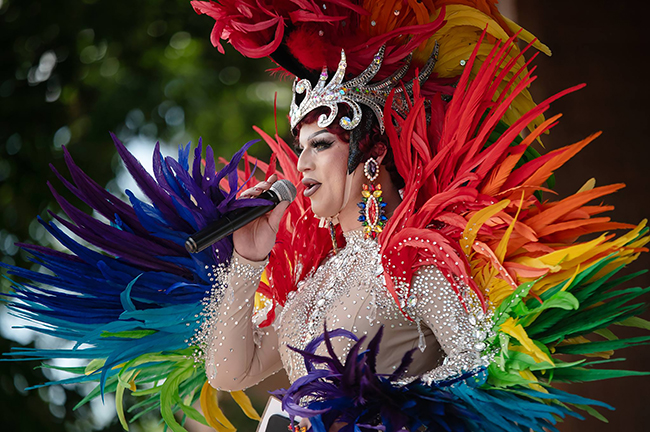
The program’s performances have also evolved to reflect the full breadth of queer experience. In 2024, Buffalo Barbie, a two-spirit artist, performed a traditional powwow dance during intermission. In 2025, a singer named Lunar Rayne, who is documenting changes in his voice during gender transition, performed “Feeling Good.” For Elaine, these moments are deliberate. “We want to make sure there is representation through the whole LGBTQ+ spectrum so that each student designer can look at the people who perform and see themselves represented in a creative role model that is thriving.”
The Infrastructure of Belonging
What local allies are building points to the same essential need: an infrastructure of inclusion. Boulder County today offers a range of resources, including One Colorado, the state’s leading advocacy organization for LGBTQ+ Coloradans and their families; A Queer Endeavor, CU Boulder’s center for gender and sexual diversity in education; and Queer Asterisk, a group therapy practice of queer and trans therapists providing mental health services and peer mentoring. The county’s Open Door Fund, administered through Community Foundation Boulder County, continues to channel philanthropic support toward these organizations.
Still, gaps persist—and the people doing this work are the first to say so. For programs like Slay the Runway, which depend on grants and individual donors to remain free for participants, the financial precariousness is constant. “Fashion design workshops are expensive by nature,” Elaine explains, “and not everyone has a supportive caregiver structure that would make the financial commitment feasible.” Some participants, she notes, would not be safe asking a parent to pay for a program like this at all.
Aimee makes the same point from the artist’s chair: the creative work and the material conditions are not separate issues. You cannot sustain a queer literary community—cannot sustain any community—on visibility alone.
What the Courthouse Means Now
Boulder County Commissioner Ashley Stolzmann said in the press release announcing the courthouse landmark designation that it was about more than one person’s courage—it was about recognizing an “enduring legacy.” Commissioner Marta Loachamin noted the particular weight of the honor “in today’s sociopolitical climate, where many Americans feel unwelcome or excluded.”
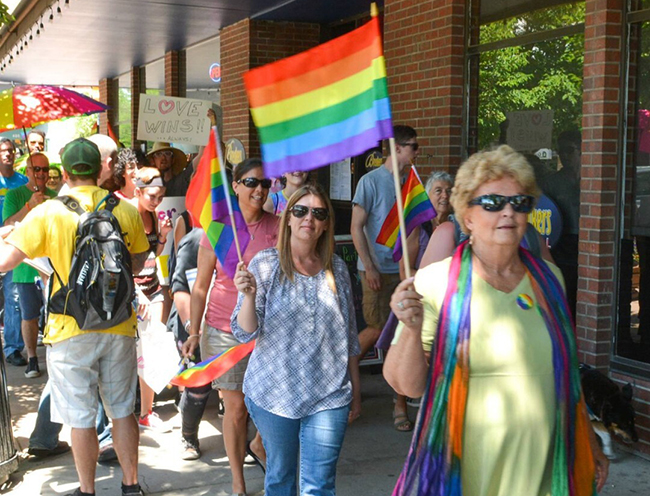
That context is not lost on the people doing the daily work of queer community-building here. The courthouse stands on Pearl Street as a newly minted symbol. But the actual work of honoring what Rorex did—the refusal to legislate morality, the insistence that a right is a right—is happening at an arts center in Longmont, in a biweekly writing group, in a teenager standing at the end of a runway in something they made themselves.
“Creative expression is that amplification,” Aimee says. “It is a way to dig out what has been forced into hiding and encourage others to do the same.”
Rorex, by most accounts, didn’t see herself as a revolutionary. She saw a legal question, found no legal barrier, and acted. Fifty-one years later, the people she helped make possible are doing the same thing—finding the gaps, building the spaces, refusing to stop.
For more information or to get involved, visit rmequality.org.