From Boulder to Beyond
01 Apr 2026
How one firefighter’s quiet decision reshaped safety for communities across Mexico
words Heather Shoning
In fire stations across the United States, safety gear follows a strict clock. After only five years, bunker coats, helmets, gloves, and boots must be retired—often long before their usefulness has truly ended—because liability standards leave little room for risk.
In parts of Mexico, the reality is strikingly different. Firefighters may serve entire careers with a single worn set of protective gear. Air systems are scarce. Infrastructure is limited. In some communities, even access to water during a fire is uncertain.
Bridging that divide is work that began quietly in Boulder nearly a decade ago.
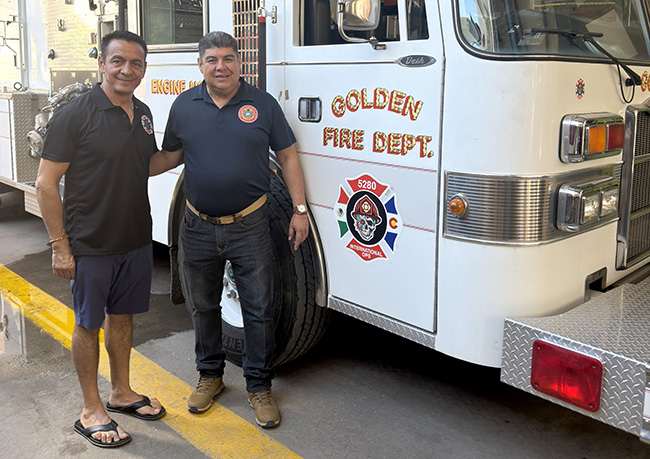
“I was at the training center in Boulder, and they were going to throw equipment in the trash because it was expired,” Boulder firefighter Manuel Garcia recalls. “I said, ‘Hey, I’ll take it.’ They asked what I was going to do with it, and I didn’t know. I just knew somebody could use it.”
That hallway decision eventually grew into 5280 International Firefighter Ops, a nonprofit organization that has delivered millions of dollars’ worth of lifesaving equipment and training to fire departments across Mexico. In the earliest days, the effort was defined more by determination than logistics. Manuel and his wife packed donated bunker gear into suitcases, using free checked bags to transport what they could.
When he first arrived with the gear, the reaction was disbelief. “They thought it was a joke,” he says. “They didn’t believe someone would just show up with firefighter gear and give it to them.”
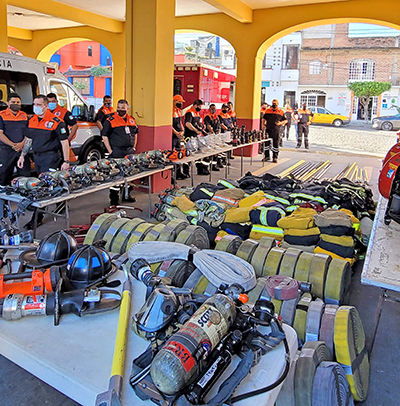
What began with salvaged equipment soon expanded through relationships within Boulder Fire-Rescue and neighboring departments. Retired trucks, surplus hoses, protective gear, and specialized tools—materials once destined for disposal—found new purpose hundreds of miles south.
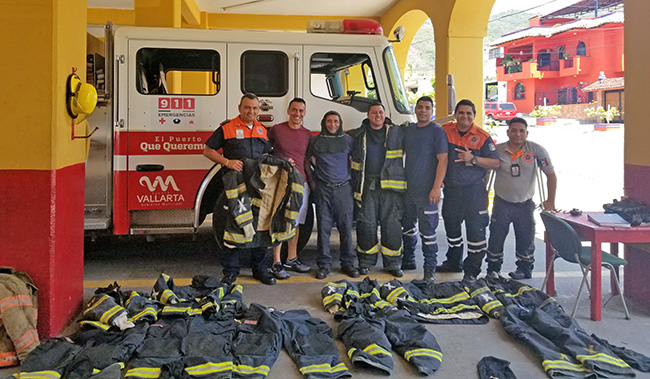
“To this one Puerto Vallarta department alone, we’ve probably donated close to five million dollars in equipment,” Manuel says. “Fire trucks, tools, bunker gear—everything they need to do the job.”
A stark contrast in resources
The conditions facing bomberos in Mexico are difficult to comprehend from a Colorado perspective.
Boulder has a population of about 106,000 residents within 27.4 square miles. Puerto Vallarta, by comparison, has nearly 300,000 residents spread across roughly 263 square miles. Boulder owns and operates 4,677 fire hydrants. Puerto Vallarta has two. Yes, two.
“The old captain here had one set of gear for twenty-five years,” Manuel says. “His sleeves were torn, his pants were torn. When we brought them hoods for heat protection, they wore them all day because they were so excited just to have hoods. It humbles you.”
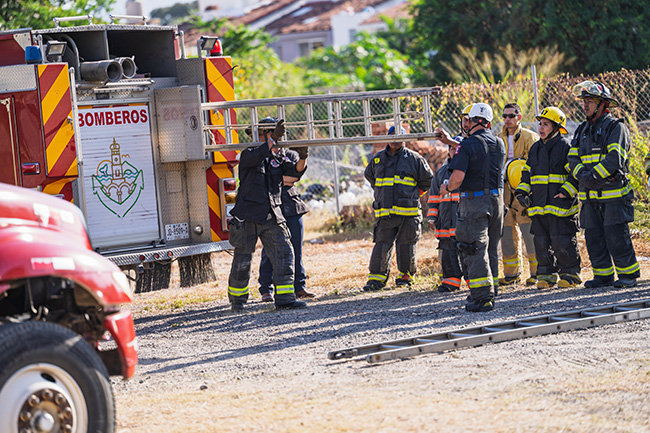
Early in the process, Manuel realized equipment alone could not solve the problem. Modern protective systems require training, familiarity, and a broader culture of safety. Today, volunteer firefighters—many from Boulder and across the Front Range—travel regularly to Mexico to provide hands-on instruction. Sessions cover high-rise response, search-and-rescue techniques, air-management strategy, ladder operations, and risk-based decision-making.
The unseen weight of generosity
As donations increased, so did the complexity of delivering them. Moving lifesaving equipment across an international border involves far more than goodwill. Shipping containers can cost tens of thousands of dollars. Importing fire trucks requires additional taxes, transport coordination, and regulatory navigation. For years, many of those expenses came directly from Manuel’s own pocket.
The creation of a nonprofit structure has begun to distribute that burden to the Mexican communities receiving the supplies, supported by donations and partnerships that now extend from Boulder to federal officials and the Mexican consulate. Even so, each delivery remains a negotiation—financial, logistical, and bureaucratic—before a single piece of gear reaches the firefighters who need it. Today, the organization has donated equipment to more than 20 cities across four states in Mexico.
And once it arrives, the receiver’s responsibility continues. Departments must commit to maintenance, inventory, and ongoing training to ensure the equipment fulfills its promise. “We want to make sure they take care of it. Because we’re going to invest in them, they have to invest in themselves,” Manuel says. And they do. Manuel regularly receives videos of his Mexican counterparts training and caring for their donated gear.
A brotherhood rooted in Boulder
What sustains the mission, Manuel says, is the firefighting community itself—particularly the one he knows in Boulder. Departments across the Front Range continue to donate equipment. Off-duty firefighters volunteer vacation time to teach abroad. Many return describing the experience as life-changing. “Every instructor who goes to Mexico to train says the same thing,” Manuel says. “They realize how humbling this is—how much these firefighters want to learn.”
Recognition has followed, including honors from the Mexican consulate. Yet the center of gravity remains unchanged. “At the end of the day, firefighters are just brothers and sisters trying to help each other,” Manuel says.